On a wet Wednesday morning in May, a motorhome went off the slipway at Kylerhea on the Isle of Skye and ended up on its side in the water. The Kyle RNLI lifeboat launched at 11:40am and arrived ten minutes later to find the sole occupant and his three dogs safely ashore. The van was not so fortunate.
The Kylerhea narrows are no place for a motorhome to go swimming. The currents there are among the strongest on the west coast of Scotland, which is why the RNLI launched fast and why everyone involved was relieved the outcome was what it was.
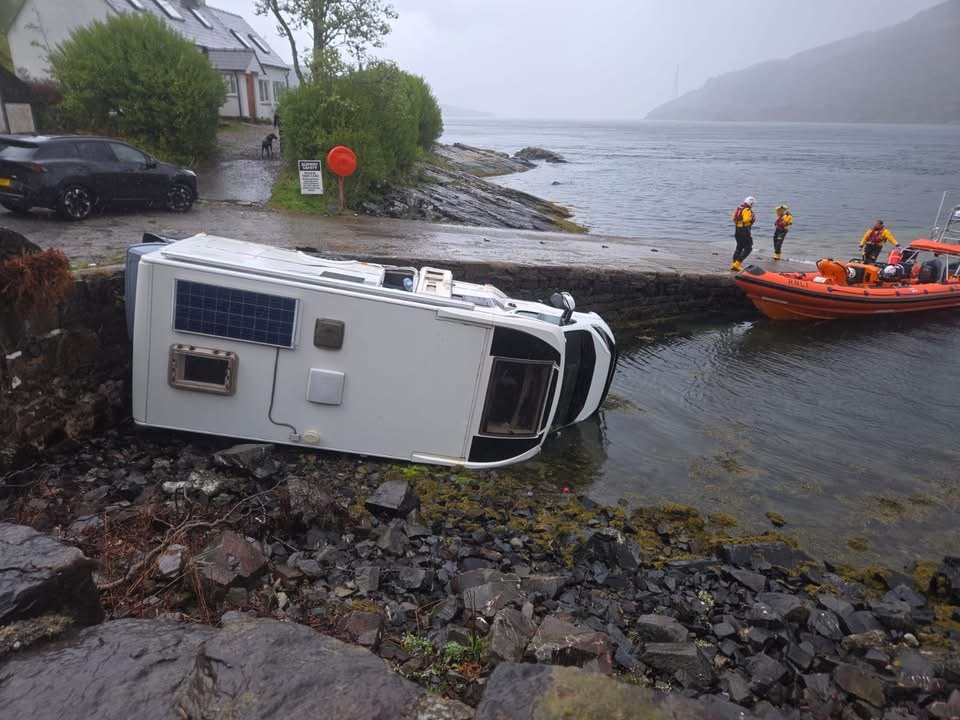
The incident had nothing dramatic behind it. No brake failure, no medical episode. A slipway, a loaded motorhome, wet conditions, and a surface that offered considerably less grip than it appeared to.
That last point is the one worth sitting with.
What slipways actually are
A slipway is a ramp built to get boats in and out of water. That is its entire purpose. Everything about its design serves that function: the gradient, the surface texture, the slope toward the water. None of it was designed with a three-and-a-half tonne motorhome in mind.
Motorhomers end up on slipways for entirely understandable reasons. The view is usually good, the space is often free, and from a distance a slipway looks like any other hard standing. By the time you are on it, you are already committed to a surface that slopes toward open water.
The seaweed problem
Wet rock is slippery. Wet rock covered in seaweed is something else entirely. The surface friction drops to levels that would make a gritter driver nervous, and it is almost impossible to see until you are standing on it.
Slipways in regular use are often coated with something that provides grip, but that coating is uneven, wears out, and is usually only applied to the section where the trailer wheels run. The edges, where a motorhome’s wheels are more likely to wander, are frequently untreated.
Add rain, add weight, add a slight steering correction on a cambered surface, and the physics take over before the driver has processed what is happening.
Reality check: seaweed does not look dangerous. It looks like the kind of thing you step over on a beach walk. On a slipway gradient under a loaded motorhome, it behaves like wet ice. You will not know this until after you needed to know it.
The places this happens
Kylerhea is a specific incident, but the hazard is general. Ferry terminals, particularly the smaller ones serving island communities, often share their approaches with boat slipways. Coastal car parks in the Highlands and Islands frequently incorporate slipways as part of their layout. Wild camping spots with water access almost always have one somewhere.
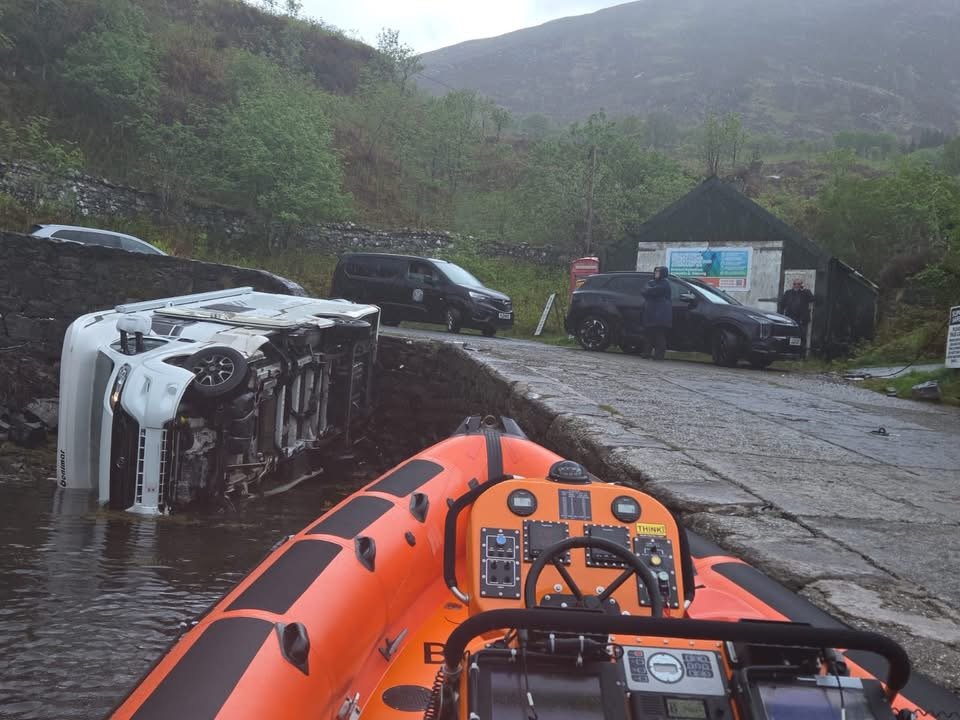
The problem is not that motorhomers seek them out. It is that slipways are embedded in landscapes that motorhomers are naturally drawn to, and they do not announce themselves as hazards.
Before you pull forward
If you are approaching any surface that slopes toward water, stop before you are on it and look at three things. First, where does the surface end and the water begin? On a busy slipway this is obvious. On a quiet one in poor light or rain, it can be harder to read than you expect. Second, is there visible weed or algae on the surface? If you can see it from the cab, the surface is not suitable for a motorhome. If you cannot see it from the cab, get out and check before you move. Third, what is the camber doing? Slipways rarely run perfectly true. A slight list to one side combined with a wet surface is enough to send weight in a direction you did not intend.
If any of those three questions gives you pause, find somewhere else. The view from the slipway is never worth what happened at Kylerhea on Wednesday morning.
The close
Kyle RNLI Helm Norman Finlayson said the crew launched as quickly as possible given reports of a campervan in the water in an area known for extremely strong currents. When they arrived, they were glad to find the occupant and his dogs safely ashore.
Nobody was injured. That is the only good news in this story, and it is genuinely good news.
If you get into difficulty on or near the water, or see someone else in trouble, call 999 and ask for the Coastguard. The Kyle crew is available to respond 24 hours a day, every day of the year. They would rather not be needed. So would you.
Photos: Kyle RNLI