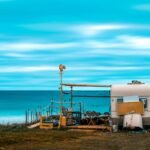
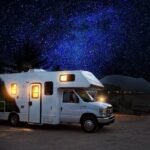
A motorhome jargon glossary explains the specialised vocabulary you’ll encounter when buying, operating, and travelling in a motorhome—from technical terms like MTPLM and payload to campsite language like hardstanding and hookup. Understanding this terminology prevents costly mistakes at DVLA weight checks, stops you damaging equipment at service points, and helps you confidently book appropriate sites and communicate with dealers and other motorhomers.
Why Motorhome Jargon Causes Real Problems
You’re standing at your first motorhome service point. Three outlets on your van. Three drains in the ground. A sign reads “Fresh water, grey waste disposal, chemical toilet emptying station.” Someone’s waiting behind you, engine idling. You’re frantically Googling “grey waste” on patchy campsite WiFi, feeling like an imposter who shouldn’t have bought a motorhome at all.
This is the reality of motorhome jargon—it doesn’t just confuse you in forums or brochures. It creates hesitation at critical moments when you need to act: booking a pitch and not knowing whether you need “hardstanding,” calling your insurance after an accident and fumbling over “A-class” versus “coachbuilt,” or worse, loading your van without understanding “payload” and getting fined by DVLA for being overweight.
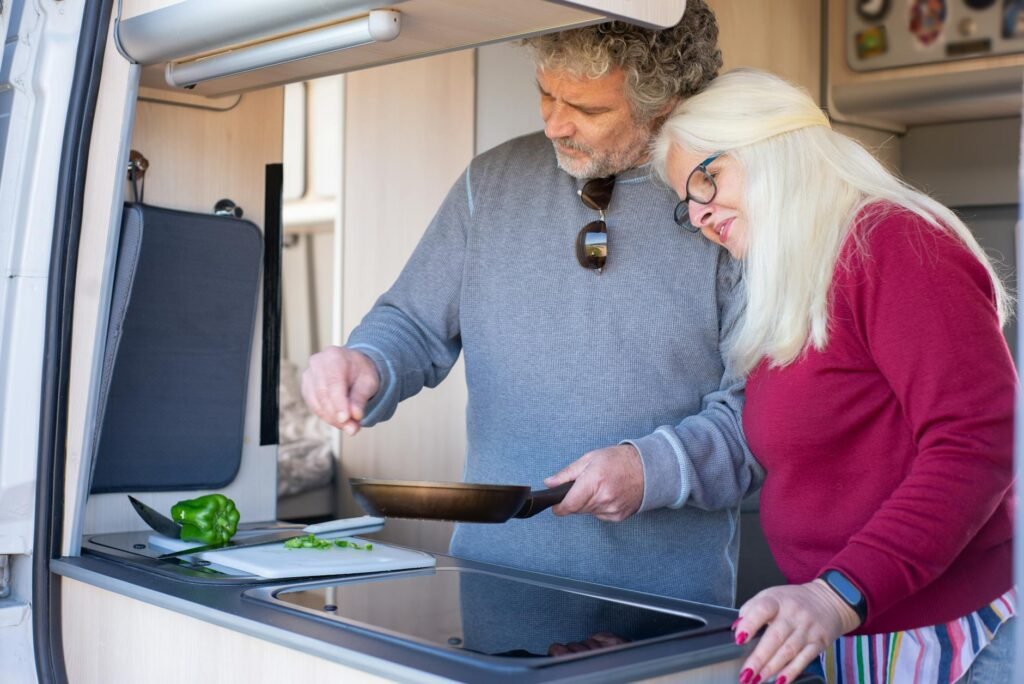
The motorhome world has developed its own language, borrowed from caravanning, marine terminology, automotive engineering, and campsite culture. Some terms are essential for safety and legality. Others simply help you communicate with the Caravan and Motorhome Club when booking a CL, or understand what a dealer means when they mention a Truma heating system.
The Essential Motorhome Jargon Glossary
A–D
A-Class: A motorhome built on a bespoke chassis with no separate cab—the living area and driving area form one integrated space. The most expensive type, with a distinctive streamlined front.
Aquaroll: A brand name that’s become generic for the wheeled water carrier you fill at taps and connect to your motorhome’s water inlet. Usually 40 litres.
Awning: A fabric extension that attaches to the side of your motorhome, creating additional covered living space. Not to be confused with a wind-out canopy, which is smaller and built-in.
Black waste/Black water: Toilet waste from your cassette or holding tank. Always disposed of separately from grey waste at designated chemical disposal points.
Blown air heating: A heating system (often Truma) that distributes warm air through ducts, like a car heater. Contrast with wet heating, which uses radiators.
C1 licence: The DVLA driving licence category needed to drive vehicles between 3,500kg and 7,500kg. Anyone who passed their test before 1 January 1997 has this automatically; newer drivers must take an additional test.
Cassette toilet: A toilet where waste collects in a removable cassette (usually 18–20 litres) accessed from outside the van. You carry this to a disposal point—it has wheels and a handle.
CL (Certified Location): A small campsite certified by the Caravan and Motorhome Club, limited to five units. Often just a farmer’s field, frequently with no facilities or only basic electric hookup.
Coachbuilt: The most common motorhome type—a living “box” mounted on a vehicle chassis (usually Fiat, Peugeot, or Citroën). You can see where cab ends and habitation begins.
Dometic: Major manufacturer of motorhome refrigerators, toilets, and air conditioning. When someone mentions a “Dometic fridge,” they mean an absorption fridge that runs on gas, 12V, or 230V.
Downplating: Officially reducing your motorhome’s Maximum Technically Permissible Laden Mass with DVLA so it falls under 3,500kg, allowing you to drive it on a standard licence. Check whether this leaves enough payload.
E–L
EHU (Electric Hookup): A mains electricity connection at a campsite, usually 230V, 10A or 16A. You need a special blue cable and sometimes a polarity tester.
Fresh water tank: The onboard tank (typically 80–150 litres) that stores clean water for taps, shower, and toilet flush. Filled either by Aquaroll or directly via an inlet.
Gaslow: A refillable LPG system that replaces traditional Calor gas bottles. You fill it at petrol stations with LPG pumps, eliminating the need to exchange bottles.
Grey waste/Grey water: Waste water from sinks, shower, and hand basins—everything except toilet waste. Stored in a grey waste tank and emptied at disposal points.
Gross Vehicle Weight (GVW): See MTPLM—essentially the same thing.
Hardstanding: A pitch with a solid surface (gravel, concrete, or plastic mesh) rather than grass. Essential in winter or wet conditions to avoid getting stuck.
Habitation door: The main entrance door to the living area, usually on the right side of UK motorhomes (left side for European models).
Inverter: A device that converts 12V DC power from your leisure battery into 230V AC power, allowing you to run mains appliances without hookup. Size matters—cheap 150W inverters won’t run a hairdryer.
Levelling ramps: Plastic or aluminium ramps you drive onto to level your motorhome on sloping pitches. Your fridge won’t work properly if you’re not reasonably level.
Leisure battery: The separate 12V battery (or batteries) powering lights, water pump, and 12V sockets when you’re not on hookup. Not the same as your engine starter battery.
Reality Check: The people who use the most motorhome jargon are often the newest to it. They’ve just learned terms like “MTPLM” and “movers” and over-signal their knowledge. Experienced motorhomers use plain language because they remember the confusion. If you don’t understand something someone says at a campsite, ask—they’ll respect the honesty more than if you nod and make a costly mistake.
M–R
Mass in Running Order (MRO): Your motorhome’s weight as it left the factory, including a 75kg driver, full fuel tank, full gas, and some water. This is your starting point for calculating payload.
MTPLM (Maximum Technically Permissible Laden Mass): The maximum your motorhome can legally weigh when fully loaded, as shown on the plate near the door. Exceed this and you’re breaking the law, risking fines and insurance invalidation.
Panel van conversion: A motorhome converted from a commercial van (often Volkswagen, Mercedes, or Ford Transit). The external appearance is van-like rather than obviously motorhome.
Payload: The difference between MRO and MTPLM—essentially what you can safely load. This includes passengers beyond the driver, fresh water beyond what’s included in MRO, all belongings, food, and equipment. Shockingly easy to exceed.
Pitch: Your allocated space at a campsite or CL. May be grass, hardstanding, serviced (with water and waste on your pitch), or non-serviced.
Refillable gas system: Systems like Gaslow or GAS IT that replace Calor bottles with a fixed tank you refill at LPG pumps, common in many European countries and some UK petrol stations.
S–Z
Service point: Campsite facility where you fill fresh water and empty grey and black waste. Layout varies—some have all three, others separate locations.
SOG system: A ventilation system for cassette toilets that extracts odours through a carbon filter, eliminating the need for chemical additives. Popular retrofit upgrade.
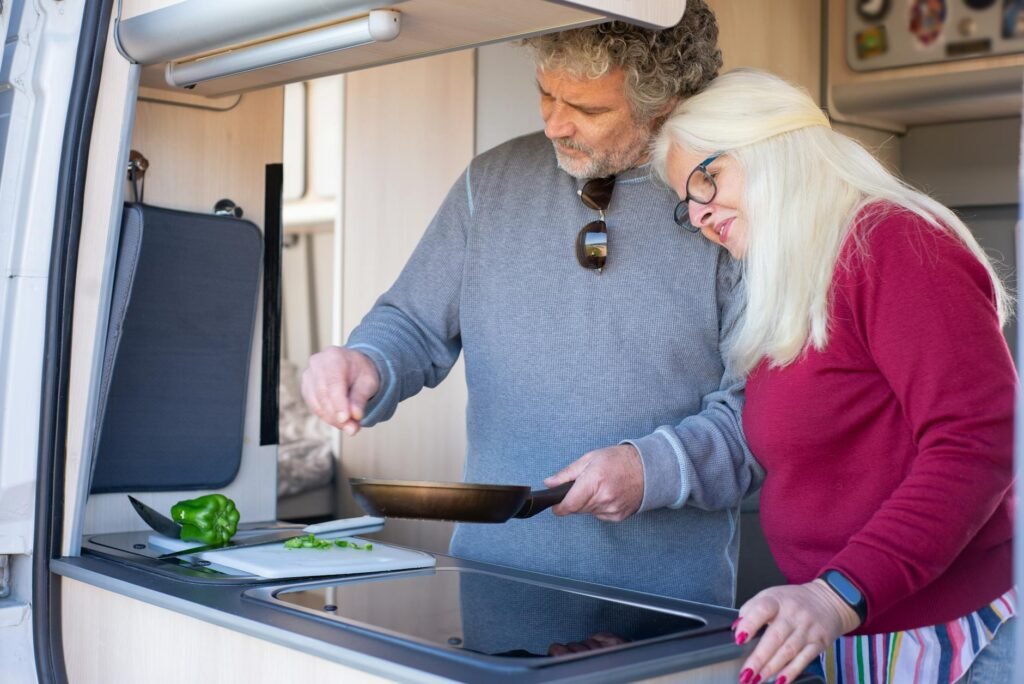
Solar panel: Roof-mounted panel that charges leisure batteries from sunlight. A 100W panel provides approximately enough power for lights and water pump in summer, but won’t run heating or air conditioning.
Truma: The dominant manufacturer of motorhome heating systems in Europe. “Truma Combi” refers to their space heating and water heating combination unit.
Waste master: A wheeled container for transporting grey waste from your motorhome to the disposal point if you’re not on a serviced pitch.
Wild camping: Parking overnight outside official campsites, typically in car parks, laybys, or on public land. Legal status varies—generally tolerated in Scotland, discouraged or prohibited in much of England and Wales.
Winterisation: Preparing your motorhome for freezing temperatures by draining water systems or adding antifreeze to prevent pipes and pumps cracking. Essential if storing outdoors.
What Goes Wrong When You Don’t Understand the Language
Misunderstanding motorhome terminology has concrete consequences. Confuse payload with MTPLM and you might overload your van—DVLA roadside checks can result in £300 fixed penalties, prohibition from driving until you offload, and potentially invalidated insurance if you’re in an accident while overweight.
Not understanding “winterisation” before your first winter can mean frozen, cracked pipes and water pumps—repairs easily cost £500 or more, plus you’ve lost use of your motorhome until spring. Booking a pitch without knowing you need hardstanding in January means arriving at a grass pitch where your 3,500kg van will sink and possibly require recovery at £150–£300.
Electrical confusion is particularly expensive. Plugging 230V appliances into 12V systems (or vice versa) can damage electronics. Not understanding that an absorption fridge needs to be level to function means spoiled food and potential damage to the cooling unit—a new Dometic fridge costs £600–£1,200.
Perhaps most immediately, not knowing service point terminology means you might put grey waste where fresh water goes, contaminating the campsite’s water system. Sites remember this. You won’t be welcome back.
Frequently Asked Questions
What’s the difference between MTPLM and payload?
MTPLM is the maximum your motorhome can weigh when loaded—a legal limit you cannot exceed. Payload is how much weight you can add to the empty motorhome (MRO) before reaching that limit. Think of MTPLM as the ceiling and payload as the space you have to fill. Many new motorhomes have surprisingly little payload—sometimes only 300–400kg, which disappears quickly when you add passengers, water, and belongings.
Do I need a special licence to drive a motorhome?
If your motorhome is under 3,500kg MTPLM, a standard UK car licence suffices. Between 3,500kg and 7,500kg, you need C1 entitlement—automatically included if you passed your test before 1 January 1997, but newer drivers must take an additional test through DVLA. Over 7,500kg requires a full lorry licence. Check the weight plate on your motorhome, not the manufacturer’s brochure.
What does “hookup” mean and do I always need it?
Hookup means a mains electricity connection at your pitch, providing 230V power through a special blue cable. You don’t always need it—your leisure battery and gas supply lights, water pump, heating, and the fridge. Hookup is useful for running high-power devices (hairdryers, kettles, microwaves), charging devices, and running electric heaters in cold weather. Many experienced motorhomers prefer non-hookup pitches as they’re quieter and cheaper.
What’s the difference between grey waste and black waste?
Grey waste is relatively clean water from sinks, showers, and hand basins. Black waste is toilet waste from your cassette. They must never be mixed and are disposed of in different places—grey waste goes down drains at service points, black waste goes into dedicated chemical toilet disposal points (Elsan points). Confusing these is both unhygienic and will make you extremely unpopular at campsites.