A coachbuilt motorhome is a vehicle where a separate habitation body (the living accommodation) has been constructed and bonded onto a commercial vehicle chassis cab, typically a Fiat Ducato. Unlike panel van conversions where the original vehicle shell remains intact, coachbuilts feature purpose-built sandwich-panel walls, a distinctive overcab section above the driver’s cab, and significantly more internal living space.
The Dealership Dilemma
You’re standing in a motorhome dealership forecourt, peering into a gleaming coachbuilt with its spacious overcab double bed, full-width rear lounge, and proper separate shower cubicle. The salesperson enthusiastically points out the family-friendly layout and the “competitive price point” compared to that cramped panel van conversion you looked at earlier. Everything seems perfect—until three months later when you’re turned away from a campsite in the Lake District because your 3,850kg motorhome exceeds their weight limit, or worse, you discover you can’t legally drive it because you passed your test after 1997 and lack a C1 licence.
This scenario plays out regularly because the term “coachbuilt motorhome” gets thrown around in dealerships without proper explanation of what it actually means—and more importantly, what the practical implications are for ownership, running costs, and legal compliance.
What Makes a Motorhome “Coachbuilt”?
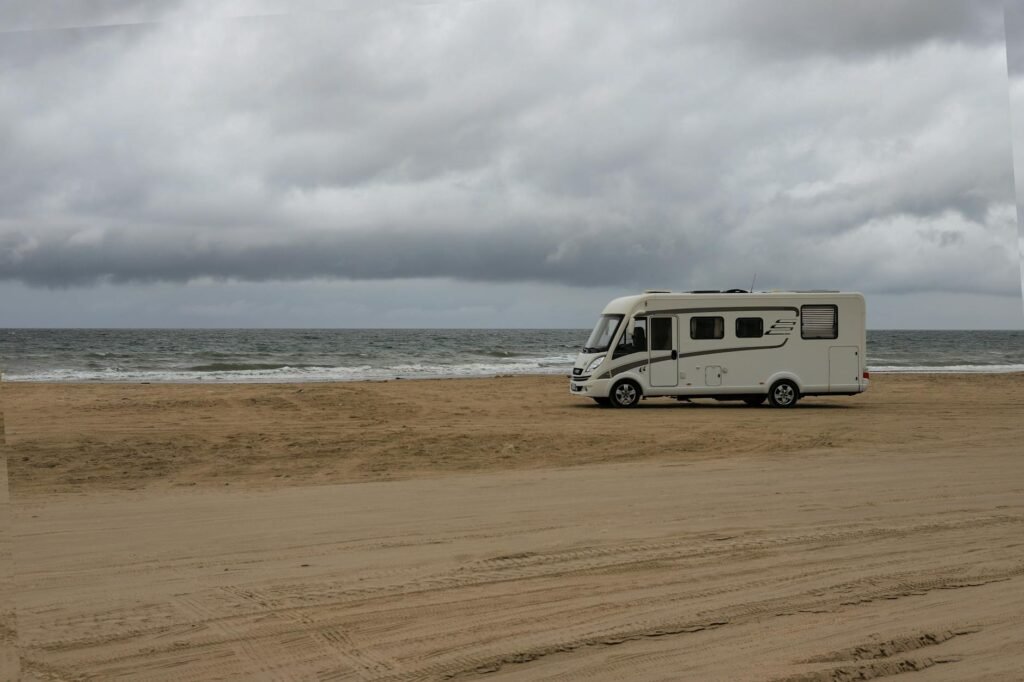
A coachbuilt motorhome is defined by its construction method rather than its layout or features. The manufacturer takes a commercial vehicle chassis cab (the front driving section with bare chassis rails extending behind) and builds a completely separate habitation body on top. This body is constructed using lightweight sandwich panels—typically aluminium or GRP outer skins with polystyrene or polyurethane foam insulation cores—which are then bonded to a wooden or aluminium framework.
The most visually distinctive feature is the overcab section (sometimes called a Luton peak), which extends over the driver’s cab to create additional sleeping or storage space. This overcab construction is virtually unique to coachbuilts and immediately distinguishes them from panel van conversions or A-class motorhomes.
The base vehicle is overwhelmingly the Fiat Ducato in the UK and European markets, though some manufacturers use the mechanically similar Peugeot Boxer or Citroën Relay. Major UK manufacturers like Bailey Motorhomes and the Swift Group produce hundreds of coachbuilt models annually using this construction method.
Reality Check: The separate body construction that gives coachbuilts their space advantage also creates their Achilles heel. Water ingress at the seams where body panels join is the primary long-term failure point. The overcab section in particular experiences constant flexing during driving, which can compromise sealant over time. Left undetected, water penetration leads to delamination (where sandwich panels separate) and chassis rot—repair bills routinely reach £5,000 to £8,000.
How Coachbuilts Compare to Other Motorhome Types
Understanding what a coachbuilt motorhome is becomes clearer when you compare it to the alternatives. If you’re new to motorhome terminology and classifications, here’s how coachbuilts differ:
- Panel van conversions: The original vehicle shell remains intact; conversion happens inside existing metal bodywork. More aerodynamic, better fuel economy (typically 30+ mpg vs 22-25 mpg for coachbuilts), but significantly less internal space.
- A-class motorhomes: Purpose-built from the ground up with no separate cab section. The living area extends to the front windscreen. Typically larger and more expensive than coachbuilts, with superior insulation and fewer leak points.
- Low-profile coachbuilts: A coachbuilt without the overcab section, creating a more aerodynamic profile. Better fuel economy and easier driving, but loses the overcab bed space.
Coachbuilts occupy the middle ground: more affordable than A-class motorhomes, more spacious than panel vans, but with higher running costs and maintenance vigilance required compared to both.
The Weight Problem Nobody Mentions
Here’s what catches new coachbuilt owners off-guard: the payload capacity is often dangerously optimistic. Manufacturers advertise a Maximum Technically Permissible Laden Mass (MTPLM or GVW) of 3,500kg to keep the vehicle within standard UK driving licence limits, but the actual unladen weight leaves minimal room for real-world additions.
A typical scenario: your coachbuilt has an advertised Mass in Running Order (MRO) of 3,100kg, giving an apparent 400kg payload. Sounds reasonable until you add:
- Two adults and luggage for a fortnight: 180-200kg
- Fresh water tank (100 litres): 100kg
- Waste water remaining: 20-30kg
- Two bikes on a rack: 40kg
- Awning and outdoor equipment: 30kg
- Food and supplies: 30kg
You’ve now exceeded 400kg without adding any modifications, accessories, or the personal belongings that inevitably accumulate. Worse, manufacturer MRO figures often exclude items like leisure batteries, gas bottles, and even the spare wheel—meaning your actual unladen weight may be 100-150kg higher than advertised.
The consequences are serious. Operating a vehicle overweight can result in £100 fines per 10% over limit, but more critically, your insurance becomes void. Many owners discover too late they need to upgrade to a 3,850kg or 4,250kg chassis—which requires a C1 licence if you passed your driving test after 1 January 1997. Obtaining this licence costs £1,000-£1,500 and requires medical examination and potentially additional driver training.
What This Means for Practical Ownership
Understanding what a coachbuilt motorhome is extends beyond construction technicalities to real-world ownership implications:
Maintenance Requirements
The bonded sandwich construction requires annual habitation service in addition to standard vehicle servicing. Professional technicians check all external seams, reseal where necessary, and inspect for early signs of water ingress. Expect £200-£350 annually. Skipping this service is false economy—undetected leaks compound exponentially, turning a £50 reseal job into structural repairs costing thousands.
Members of The Caravan and Motorhome Club can access technical advice and approved workshop networks, which becomes invaluable when specialist coachbuilt body repairs are needed.
Running Costs
The aerodynamic profile of a coachbuilt—essentially a tall box pushing through air—means fuel consumption of 22-25 mpg is typical, compared to 28-32 mpg for equivalent panel vans. Over 10,000 miles annually, this difference adds £400-£600 to running costs at current diesel prices. The overcab section acts like a sail in crosswinds, making motorway driving more demanding and tiring.
Site Access
Height restrictions become a consideration. Most coachbuilts measure 2.9-3.2 metres tall, limiting access to some car parks, fuel stations, and campsites with low barriers or overhanging trees. Always know your vehicle’s exact height—it should be displayed prominently in the cab.
DVLA and Licensing
Before purchasing any coachbuilt, check its GVW against your licence entitlements. The DVLA website has a clear checker tool. If you need a C1 licence, factor in the time (typically 6-12 weeks) and cost (£1,000-£1,500) before you can legally drive your new motorhome.
Making the Right Choice
A coachbuilt motorhome makes excellent sense for buyers who prioritize:
- Maximum internal living space for their budget
- Separate sleeping areas (overcab bed plus rear bedroom)
- True family accommodation with fixed furniture
- Affordable entry into motorhoming (used coachbuilts from £15,000)
However, they’re the wrong choice if you want:
- Low-maintenance ownership with minimal specialist servicing
- Best possible fuel economy
- Stealth camping capability or urban maneuverability
- Lowest long-term running costs
The key is entering coachbuilt ownership with eyes open to both the construction method’s advantages and its inherent maintenance requirements. Understanding the full range of motorhome types and terminology helps ensure you select the right vehicle type for your specific needs rather than being swayed by interior layout alone.
Reality Check: Coachbuilts dominate the UK motorhome market not because they’re objectively “better” than other types, but because they offer the most habitation space per pound spent. This makes them appear to be bargains—until you factor in fuel costs, maintenance, potential weight upgrades, and depreciation. A coachbuilt purchased new for £55,000 will typically lose £12,000-£15,000 in the first two years, compared to £8,000-£10,000 for an equivalent premium panel van conversion.
The Bottom Line
A coachbuilt motorhome is a specific construction type that bonds a separate habitation body onto a commercial chassis cab, creating distinctive vehicles with overcab sections and exceptional internal space. They represent excellent value for space-conscious buyers willing to accept higher fuel consumption and diligent maintenance requirements, particularly around water ingress prevention.
The construction method creates both the coachbuilt’s greatest strength (spaciousness and affordability) and its primary weakness (multiple potential leak points requiring ongoing vigilance). Success with coachbuilt ownership depends on realistic payload calculations, proper annual servicing, and understanding your legal requirements before purchase—not after you’ve signed the paperwork.
Frequently Asked Questions
Are coachbuilt motorhomes cheaper than panel van conversions?
Entry-level coachbuilts are typically cheaper to purchase than premium panel van conversions of similar age—you might pay £35,000 for a new coachbuilt versus £50,000 for a new panel van conversion with equivalent sleeping capacity. However, lifetime running costs favor panel vans due to better fuel economy (potentially £500+ annually), lower insurance premiums, and simpler maintenance without specialized body repairs. The “cheaper” option depends whether you prioritize purchase price or total cost of ownership.
How long do coachbuilt motorhomes last?
With diligent maintenance—particularly annual resealing and immediate attention to any water ingress—a quality coachbuilt from manufacturers like Bailey or Swift can provide 20-25 years of service. The Fiat Ducato chassis is robust and long-lived. However, neglected coachbuilts can develop serious structural issues within 10-15 years, particularly in the overcab section. The habitation body typically determines lifespan more than the mechanical components, which can be repaired or replaced relatively affordably.
Can you wild camp in a coachbuilt motorhome?
Legally yes (where wild camping is permitted), but practically coachbuilts are the least suitable motorhome type for wild camping. Their height (typically 3+ metres) and distinctive overcab profile make them highly visible and impossible to park discreetly. The large white box appearance screams “motorhome” in any setting. Panel vans are vastly superior for wild camping or overnight stops in car parks, laybys, or urban areas where discretion matters. Coachbuilts work best at established campsites and aires where height and visibility aren’t concerns.
Do I need to weigh my coachbuilt motorhome?
Absolutely yes—it’s one of the most important things new coachbuilt owners should do. Visit a public weighbridge (found at refuse sites, agricultural merchants, or some motorway service areas) with your motorhome loaded exactly as you’d take it on holiday, including passengers, full water, equipment, and supplies. This reveals your actual laden weight, not manufacturer estimates. If you’re within 50kg of your 3,500kg limit, you’re effectively overloaded for real-world use and should either reduce payload dramatically or upgrade the chassis and potentially your driving licence. Many experienced motorhomers discover they’re illegally overweight only after weighing—insurance companies can refuse claims if you’re operating over GVW limits.