Do I Need a Special Licence to Drive a Motorhome in the UK?
If you passed your driving test before 1 January 1997, your standard UK licence allows you to drive motorhomes up to 7,500kg. If you passed after that date, you’re restricted to 3,500kg unless you pass an additional C1 category test.
You’re scrolling AutoTrader on a Sunday evening. Six-berth coachbuilt, fixed rear bed, full-width washroom. Under £30,000. Everything you wanted. You call the seller Monday morning.
“You passed your test after 1997, yeah? This one’s 3,850kg, so you’ll need C1.”
You don’t have C1. You didn’t know C1 existed. The motorhome you can actually drive legally is either smaller than you need, older than you wanted, or fifteen grand more expensive because it’s been engineered down to 3,499kg.
This is how most people discover the 1997 licence change – at the point of sale, not before. By then, you’ve already spent weeks imagining layouts and researching sites. Now you’re choosing between spending money on a test you never planned for, or compromising on the vehicle itself.
What Actually Changed in 1997
Until 1 January 1997, a standard UK car licence (Category B) automatically included entitlement to drive vehicles up to 7,500kg and tow trailers up to 8,250kg combined weight. If you passed your test before that date, you kept those rights. They’re printed on your photocard as categories C1 and C1+E.
After 1997, new drivers received only Category B – vehicles up to 3,500kg Maximum Authorised Mass (MAM), towing up to 750kg, or higher trailer weights if the combined total stays under 3,500kg. To drive anything heavier, you need to pass a separate C1 test.
This wasn’t an anti-motorhome policy. It was EU licence harmonisation. But the effect on the motorhome market was immediate and lasting.
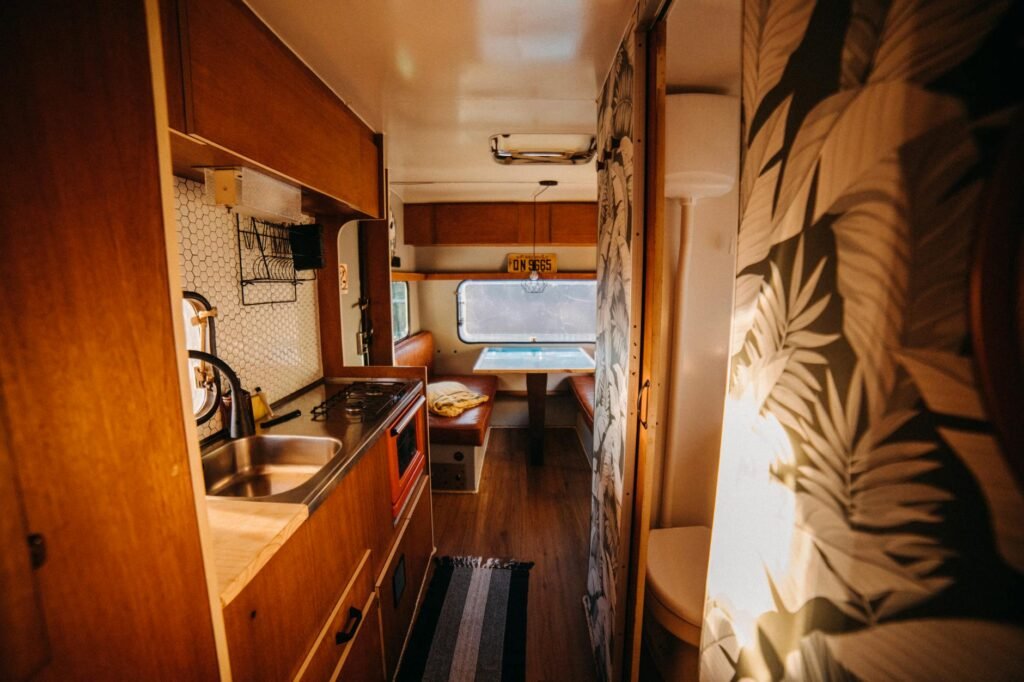
Most Fiat Ducato-based panel van conversions sit comfortably under 3,500kg. A Boxer or Transit conversion with a rising roof, small washroom, and two berths will typically register between 3,200kg and 3,400kg. You’re fine on a post-1997 licence.
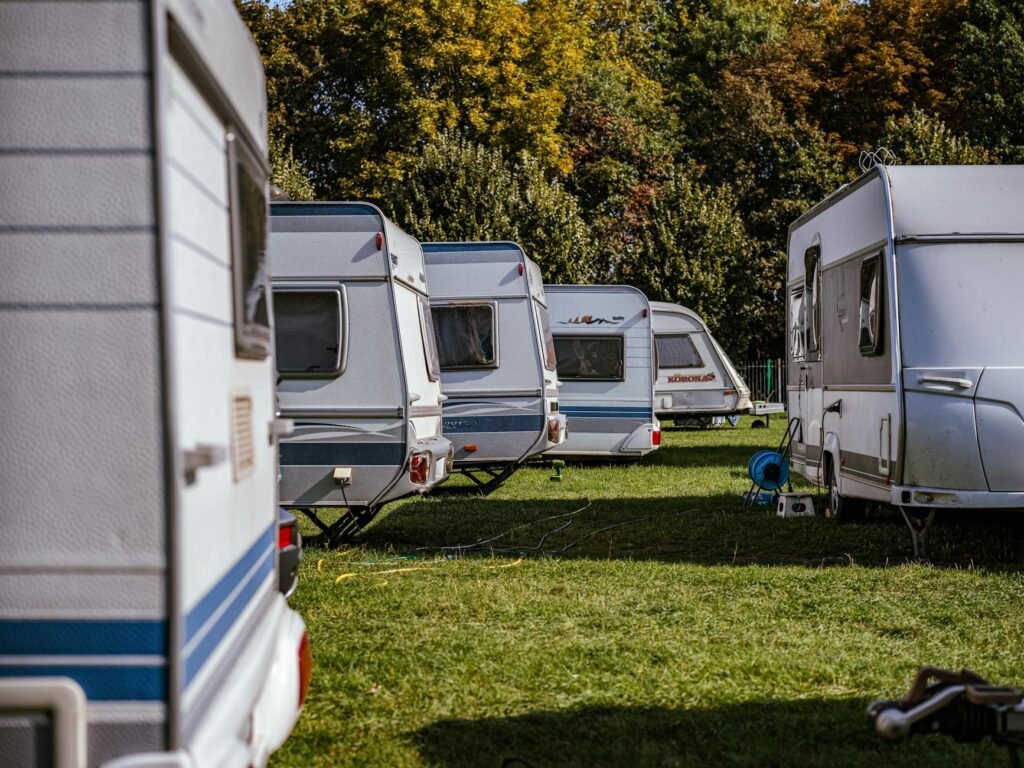
But coachbuilts – the ones with overcab beds, full washrooms, and space for four or six people – often exceed 3,500kg even when empty. A Mercedes Sprinter-based coachbuilt might be 4,250kg. Older models from the 1990s and 2000s regularly sit at 5,000 – 5,500kg. These are common, affordable vehicles in the secondhand market. And if you passed your test after 1997, you cannot legally drive them.
Reality Check: The 3,500kg limit includes everything – fuel, water, gas, passengers, luggage, bikes. That 3,480kg panel van becomes illegal the moment you add a bike rack, awning, and two weeks of kit.
Why This Matters More Than You Think
The licence restriction doesn’t just limit what you can drive today. It shapes the entire secondhand market you’re buying into.
Manufacturers responded to the 1997 change by engineering lighter motorhomes. Thinner panels, aluminium chassis, minimal payload allowances. A modern 3,500kg motorhome is impressively light. It’s also more expensive. You’re paying for the engineering that shaved off those 500kg.
Older, heavier motorhomes – the ones that don’t care about the limit because they were built before it mattered – are now mostly available only to pre-1997 licence holders. That’s a shrinking pool of buyers as the demographic ages. Prices reflect it. A 4,800kg coachbuilt from 2005 might be £18,000. The equivalent 3,400kg model from 2015 is £32,000.
If you’re comparing new versus used motorhomes, your licence date fundamentally changes which part of the market you can access.
How to Check What You’re Allowed to Drive
Your photocard driving licence lists categories on the reverse. Look for:
Category B: Standard car licence. Up to 3,500kg.
Category C1: Vehicles between 3,500kg and 7,500kg. If this appears, you can drive heavier motorhomes.
Category C1+E: Same as C1, but with a trailer attached.
If you passed before 1 January 1997, C1 and C1+E should be printed automatically. If they’re not, contact the Driver and Vehicle Licensing Agency (DVLA) – it’s likely an admin error.
If you passed after 1997 and C1 is absent, you’re restricted to 3,500kg. That’s not an opinion or a grey area. It’s the licence category you hold.
Getting C1 If You Need It
If you want to drive a heavier motorhome and don’t currently hold C1, you’ll need to apply for it. This isn’t a theory-only upgrade. It’s a full vocational licence process administered by the Driver and Vehicle Standards Agency (DVSA).
Step 1: Get a D4 Medical
You cannot apply for C1 without a completed D4 medical examination form. This must be signed by a doctor – usually your GP, though some use private medicals to avoid NHS waiting times.
Cost: £50 – £120 depending on whether your GP charges or you use a private provider. The medical checks vision, cardiovascular health, and neurological conditions. If you have diabetes, epilepsy, or certain other conditions, additional evidence may be required.
Step 2: Apply for a Provisional C1 Licence
Once your medical is complete, apply online via the DVSA website or by post using form D2. You’ll send your completed D4 form, your current photocard licence, and a passport photo.
Processing time: typically 1 – 3 weeks. You’ll receive a new licence showing provisional C1 entitlement.
Step 3: Pass the C1 Theory Test
This is separate from the car theory test. It includes multiple-choice questions and hazard perception clips, focused on larger vehicles, stopping distances, and load security.
Cost: £23. Book online through the DVSA. You must pass this before you can take the practical.
Step 4: Take C1 Practical Training
You cannot take the C1 test in your own vehicle. You’ll need an approved driving instructor with a suitable C1 vehicle – typically a 7,500kg lorry, not a motorhome.
Most people need 6 – 12 hours of training. Cost: £40 – £60 per hour, depending on location. Some instructors offer test-day packages including the vehicle hire for the test itself.
Step 5: Pass the C1 Practical Test
The test includes an eyesight check, vehicle safety questions, reversing exercise, and 60 – 90 minutes of on-road driving. The examiner will expect you to handle a large vehicle smoothly in traffic, reverse accurately, and demonstrate awareness of height and width.
Cost: £115 for the test (car and trailer combination). If you fail, you’ll rebook and pay again.
Total cost for C1 from scratch, assuming one pass: £200 – £400 depending on how much training you need and whether you use NHS or private medicals.
Reality Check: You’re not learning to drive. You already know how. You’re learning to handle extra length, width, and weight in situations where mistakes cost more – tight junctions, narrow lanes, and roundabouts where your back end cuts in.
What Happens If You Get This Wrong
Driving a vehicle over your licence entitlement isn’t a minor paperwork issue. It’s driving otherwise than in accordance with a licence – a separate offence from having no licence at all.
If you’re stopped by police or involved in an accident while driving a 4,200kg motorhome on a 3,500kg licence, your insurance is void. Driving without valid insurance carries 6 – 8 penalty points, an unlimited fine, and possible vehicle seizure. If someone is injured and you’re uninsured, you may face prosecution and a ban.
Even if you’re never stopped, the consequences catch up at resale. If you’ve been driving overweight, you’ll need to declare it when selling. Buyers will ask. Dealers will check. And if you’ve added weight through modifications – solar panels, bike racks, awnings, heavier leisure batteries – you may have crossed the 3,500kg threshold without realising.
That 3,480kg motorhome you bought legally can easily become a 3,650kg motorhome after two years of upgrades. At that point, you’re retrospectively illegal every time you’ve driven it since the first modification.
Frequently Asked Questions
Can I drive a motorhome on a car licence if it’s under 3,500kg?
Yes. If your vehicle’s Maximum Authorised Mass (printed on the VIN plate, usually inside the driver’s door or near the habitation door) is 3,500kg or under, a standard Category B car licence is sufficient. This applies regardless of when you passed your test.
What if my motorhome was downplated to 3,500kg?
Downplating – where a manufacturer or converter reduces the legal weight limit to 3,500kg even though the chassis could carry more – is common. If your V5C registration document and VIN plate both show 3,500kg, you can drive it on a Category B licence. But you must stay within that reduced limit. Overloading a downplated vehicle is still illegal, even if the chassis is physically capable of more.
Do I need C1 to hire a motorhome?
It depends on the vehicle. Most rental fleets use panel van conversions under 3,500kg specifically to avoid excluding post-1997 drivers. But some larger family motorhomes in rental fleets exceed 3,500kg. The hire company will check your licence before handing over keys. If you don’t hold C1 and the motorhome is over 3,500kg, they won’t rent to you.
Does C1 expire?
Yes. If you gained C1 automatically (pre-1997 licence), it expires at age 45, then renews in five-year blocks subject to medical checks. If you passed C1 as a separate test after 1997, it also requires renewal every five years from age 45 onwards. You’ll need a new D4 medical each time. If you don’t renew, you lose the entitlement and revert to 3,500kg only.